
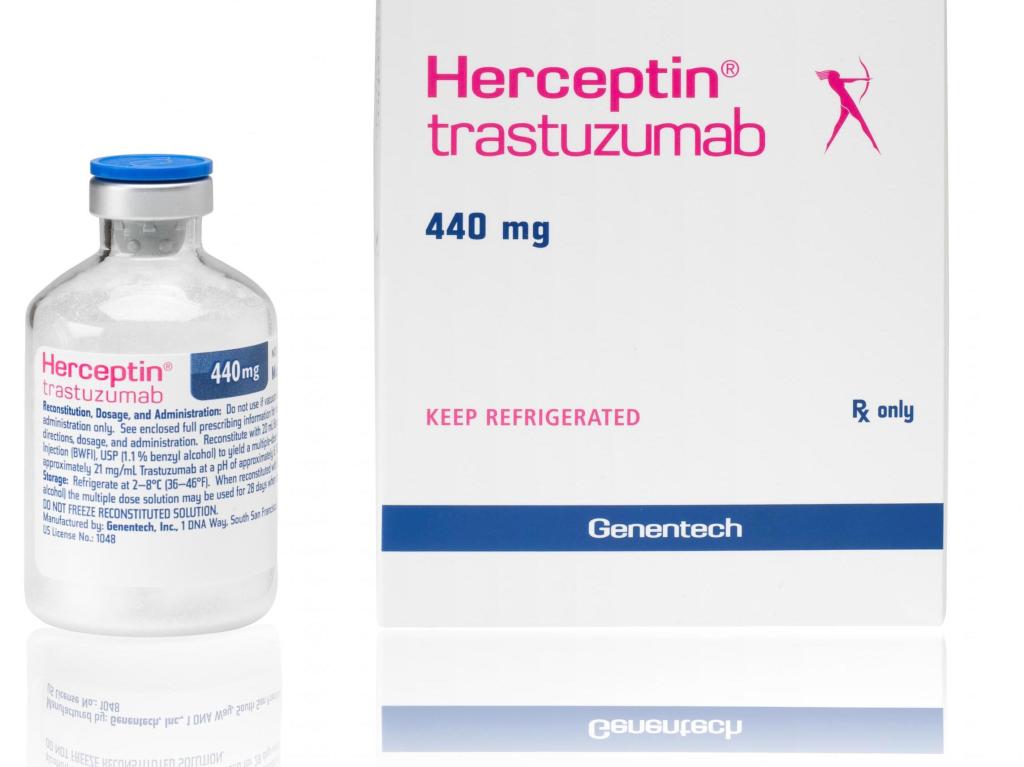
The intravenous monoclonal drug Herceptin or trastuzumab is a drug used in chemotherapy to treat HER2 positive adjuvant breast cancer, and breast cancer that has metastasized in the body. It can also be used in combination with other chemotherapy drugs to treat HER2 positive metastatic gastric cancer. Monoclonal antibodies are antibodies that are produced by the same B cell clone. Labs use animal and human proteins to produce these monoclonal antibodies that all recognize and respond to the same specific target antigen. Monoclonal antibody medications are relatively new and are a target therapy for certain cancers and other diseases. Herceptin works by targeting the HER2 receptor on cancerous cells by blocking them. HER2 receptors are thought to help with the prevention of the multiplication of cancerous cells, however when there is an overexpression of this receptor on the cells then the cancerous cells will rapidly and uncontrollably proliferate spreading the cancer. Herceptin works to block these HER2 receptors when there is overexpression to help prevent the spread of cancer. Herceptin is manufactured by Genentech and the side effects of the drug listed on their website are as follows:
Serious side effects
- Weakening of the heart muscle or other heart problems
- Infusion reactions resulting in (within 24 hours after introduction of drug):
- Fever and chills
- Feeling sick to your stomach (nausea)
- Throwing up (vomiting)
- Pain (in some cases at tumor sites)
- Headache
- Dizziness
- Shortness of breath
- Death of unborn baby
- Birth defects
- Signs of severe lung problems:
- Severe shortness of breath
- Fluid in or around the lungs
- Weakening of the valve between the heart and the lungs
- Not enough oxygen in the body
- Swelling of the lungs
- Scarring of the lungs
- Low white blood cell counts
Common side effects when used in treatment for breast cancer:
- Fever
- Feeling sick to your stomach (nausea)
- Throwing up (vomiting)
- Infusion reactions
- Diarrhea
- Infections
- Increased cough
- Headache
- Feeling tired
- Shortness of breath
- Rash
- Low white and red blood cell counts
- Muscle pain
Common side effects for patients receiving treatment for gastric cancer:
- Low white blood cell counts
- Diarrhea
- Feeling tired
- Low red blood cell counts
- Swelling of the mouth lining
- Weight loss
- Upper respiratory tract infections
- Fever
- Low platelet counts
- Swelling of the mucous membranes
- Swelling of the nose and throat
- Change in taste
Unfortunately many side effects may occur because of the aggressive nature of chemotherapy drugs in general. However, if some serious side effects occur because of the drug, that may adversely impact the patient in their course of treatment or later become a life threatening issue. Unfortunately many patients taking Herceptin have exhausted other options and need the drug for the management of their cancer thus making the side effects worth the primary treatment of the drug. While this drug doesn’t necessarily make you more susceptible to other diseases, severe side effects can be heart and or lung failure. The drug can also cause birth abnormalities or miscarriage and patients may experience low white blood cell counts which may cause patients to become predisposed to other infections due to a lowered immune system.
While not specified, general lowered white blood cell counts can impact both the innate and adaptive immune response by suppressing the active cell types involved in the immune system. Fortunately, Herceptin does not adversely react in combination with other drugs. However, it has been seen to cause cardiac problems when used with another chemotherapy drug known as anthracycline. It is amazing to think of what monoclonal antibodies have allowed us to achieve within the medical field. Due to the access of this technology, life threatening cancer and other autoimmune diseases can be treated and provide relief to thousands. Herceptin is just one example of this technology and it’s exciting to think of the progression that can be made within the next few decades in chemotherapy and autoimmune therapy drugs.

 Allison Roney's Microbiology Blog